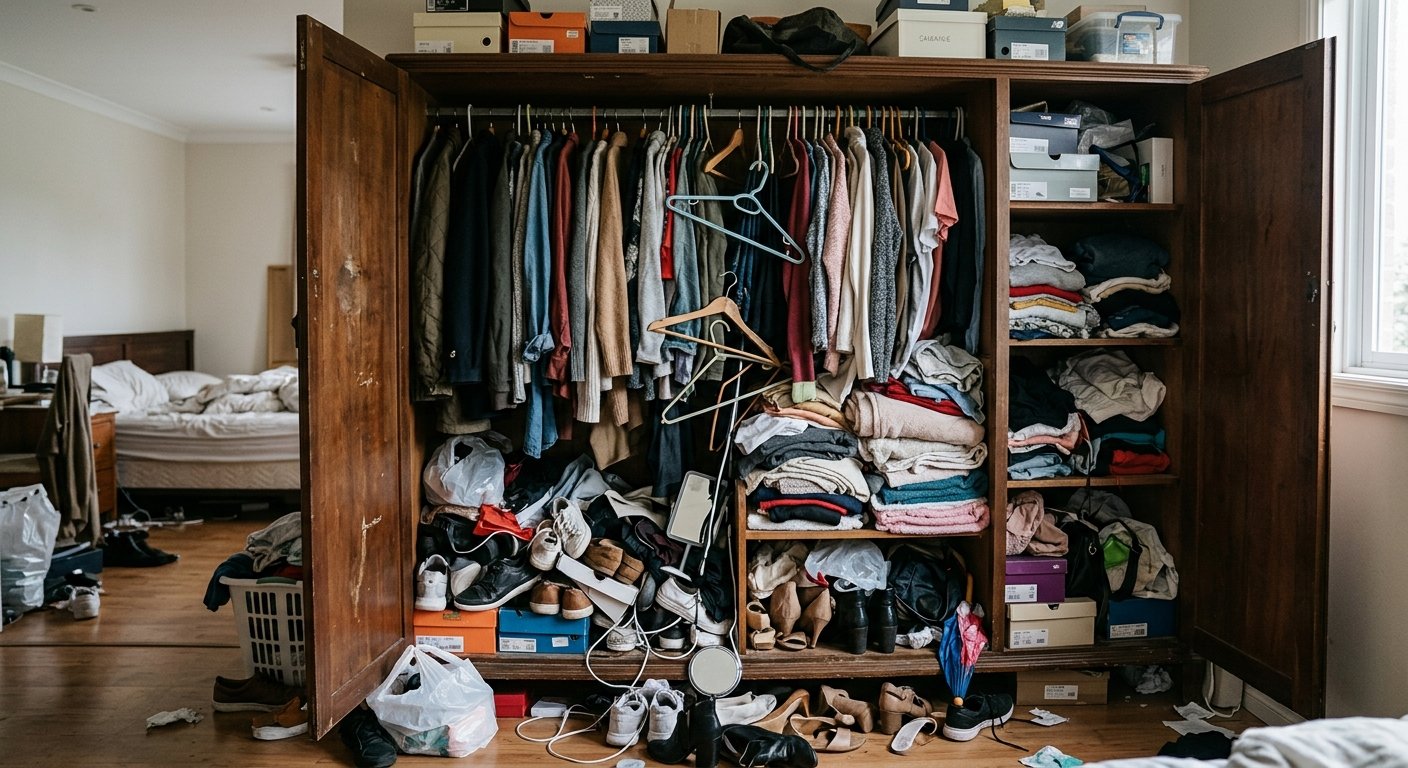
If you open your closet every morning and feel a little wave of stress, you’re not alone. A disorganized wardrobe doesn’t just waste time — it wastes money, since it’s easy to forget what you own and buy duplicates. The good news? You don’t need custom closets or expensive organizers to fix it. With a bit of strategy and a few affordable materials, you can transform your wardrobe into a space that actually works for you.
Here’s a step-by-step guide to get there.
1. Empty It Completely (Yes, Everything)
Before you organize anything, take everything out. Lay it all on your bed or floor so you can see the full picture. This step feels chaotic, but it’s the only way to truly understand what you own — and it’s much easier to sort items into piles when they’re all visible instead of hidden in a stuffed closet.
While your wardrobe is empty, take a few minutes to wipe down shelves and rods. A fresh, clean space makes the whole process feel more rewarding.
2. Sort Into Four Simple Piles
As you go through your clothes, divide everything into:
- Keep — items you wear regularly and that fit well
- Maybe — things you’re unsure about (put a time limit on this pile — if you haven’t touched it in six months, it goes)
- Donate/Sell — good condition, but no longer useful to you
- Discard — damaged beyond repair
Be honest here. Clothes that don’t fit, that you haven’t worn in over a year, or that no longer match your style are just taking up space that could be used more efficiently.
3. Group by Category, Not by Color
A common mistake is organizing by color alone. It looks nice, but it’s not always practical. Instead, group items by category first — tops, bottoms, dresses, outerwear — and then arrange by color within each category. This way, you can actually find what you’re looking for instead of scanning the whole closet for “that blue shirt.”
4. Use Vertical Space (It’s Free!)
Most wardrobes waste vertical space. A few low-cost ways to use it:
- Add a second hanging rod using an inexpensive tension rod or a hanging closet organizer with shelves — great for doubling storage in small closets.
- Stack shelves with dividers made from repurposed shoeboxes or cardboard to keep folded items from toppling over.
- Use the back of the door with an over-the-door shoe organizer — it works just as well for accessories, scarves, or rolled-up workout clothes.
5. Fold Smarter, Not Harder
The way you fold clothes has a bigger impact than most people realize. Try the vertical folding method (popularized by decluttering experts): instead of stacking sweaters and t-shirts flat on top of each other, fold them into rectangles and stand them upright in drawers, like files in a cabinet. This lets you see every item at a glance and prevents the “dig to the bottom” problem.
6. DIY Storage Solutions That Cost (Almost) Nothing
You don’t need to buy matching bins from a home store. Some budget-friendly alternatives:
- Shoeboxes covered in leftover wrapping paper or fabric scraps make great drawer dividers.
- Repurposed jars are perfect for small accessories like hair ties, buttons, or jewelry.
- Fabric or plastic bags (even gift bags) can hold off-season items on a shelf.
- Curtain rings clipped to a hanger create an instant scarf or belt organizer.
- Soda can tabs looped onto hangers let you stack multiple hangers vertically — a clever trick for small closets.
7. Rotate Seasonal Items
If your closet is small, keep only the current season’s clothing accessible. Store off-season items in labeled bags or bins under the bed, on a high shelf, or in a storage ottoman. This alone can free up a surprising amount of space without spending anything.
8. Label Everything
A cheap roll of masking tape and a marker go a long way. Labeling shelves, bins, and boxes makes it easy to put things back where they belong — which is the real secret to staying organized long-term. It’s not about a perfect one-time overhaul; it’s about making the daily habit effortless.
9. Maintain a “One In, One Out” Rule
Once your wardrobe is organized, the easiest way to keep it that way is a simple rule: when something new comes in, something old goes out. This keeps your closet from creeping back into chaos and helps you be more intentional about future purchases.
The Bottom Line
Organizing your wardrobe isn’t about buying the perfect products — it’s about using what you already have, thinking a little creatively, and building habits that keep the system running. Start small: pick one shelf, one drawer, or one section of your closet, and build momentum from there. Your future self, rushing to get dressed on a busy morning, will thank you.
Have a clever low-budget storage hack of your own? We’d love to hear it — organizing is always better shared.